Skip to content
Marc CotterillOct 7, 2026, 1:34:09 PM10 min read

From Firefighting to Control: Transforming Financial Crime Operations

INTRODUCTION

THE CASE study

An operation under pressure - rising costs, growing backlogs, too much change, without enough measurable impact.

This anonymised case study shows how a structured, evidence-led approach helped a real Financial Services organisation turn operational pain into a focused transformation roadmap - delivering measurable savings while protecting quality, compliance and customer outcomes.

A note on confidentiality: "Parallax Bank" is a pseudonym. This case study is based on a real Map Room customer engagement. Due to the sensitive nature of the work, details that would identify the organisation have been changed or generalised to protect the its identity. The challenges, approach and outcomes described are based on the real engagement.

The organisation was operating at scale in a highly regulated Financial Services environment, with significant growth ambition and a complex Financial Crime operation.

Led by the Chief Operating Officer (COO), its leadership team had been set a substantial bottom-line savings target to deliver over an 18-month period - without compromising quality, compliance or customer growth.

Financial Crime Operations quickly emerged as one of the clearest places to focus: high-risk, high-volume and highly manual, with visible operational pressure and significant potential for measurable improvement.

Case study - Firefighting Guide - Social Share
AT A GLANCE

CUSTOMER

A real UK-based Financial Services organisation [anonymised as 'Parallax Bank'].

WHAT WE DID

A structured, evidence-led approach to identify and deliver tangible cost savings.

KEY OUTCOMES

£6.23m in annualised savings & more than £3m of further potential savings identified

[learn more below]

THE CHALLENGE

FIRE-FIGHTING mode...

The signs of an operation in firefighting mode were everywhere.

More people had been added to address the problem, yet costs continued to rise and backlogs were not clearing. Quality issues and regulatory interest had contributed to a “catch-all, check-all” culture, increasing failure demand, fuelling queues and slowing progress.

Multiple change projects were already in flight, but prioritisation was unclear and there was limited line of sight between individual initiatives and the organisation’s wider savings target.


Customers were feeling it too.

Delays in onboarding, processing and resolution were putting experience, trust and outcomes at risk. The leadership team needed to make decisions quickly, but while symptoms existed across the operation, it was not yet clear which represented the biggest opportunities for meaningful change and measurable business benefit.

Simply throwing more resource at the problem might have helped to create some temporary added capacity, but it did not address the root causes.

Something had to change.

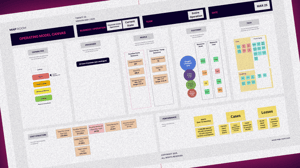
Firefighting - OP MODEL
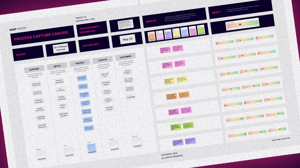
Firefighting - PROCESS
OUR APPROACH

CHANGE THE WAY you change...

The first step was to get clear on the outcomes the business wanted to achieve.

A cross-functional group was brought-together to establish a shared Vision, Mission and OKRs, giving the transformation a clear direction and measurable definition of success.

One of the central high-level objectives was defined as:

Create an efficient, self-sufficient operation that removes waste, improves flow and optimises how people and technology are used.

In other words: Do more with less

With the direction set, the team used Map Room’s tried-and-tested '3D Approach' to identify, prioritise and deliver change.

The underlying principle was simple: Too much change, all at once, kills outcomes. The goal was to find the critical few high-impact change levers capable of unlocking the greatest measurable value.

THE 3D APPROACH:
OUR 3D APPROACH

STEP I

DISCOVER
Gather evidence from across the operation and evaluate the impact on customers, colleagues and the business.

Insight to Opportunity

STEP II

DEVELOP
Turn insights into clear opportunities and prioritise them based on potential business and customer value versus the effort required.

Opportunity to Solution

STEP III

DELIVER
Translate the strongest opportunities into solutions, test them, move into delivery and track whether the expected benefits materialise.

Solution to Results

INSIGHT-LED, COLLABORATIVE, PEOPLE CENTRED CHANGE

GET THE FULL
approach

This case study gives you the high-level overview.

'Get Out of Firefighting Mode and Regain Control' gives you the complete approach and blueprint. It's our most comprehensive guide, offering step-by-step instructions for COOs and Operations leaders, taking them through the approach behind this case study - with practical tools, techniques and templates to help you organise, prioritise and deliver change that lands and lasts.

From setting direction and gathering insights to developing opportunities, testing solutions, building buy-in and tracking outcomes.
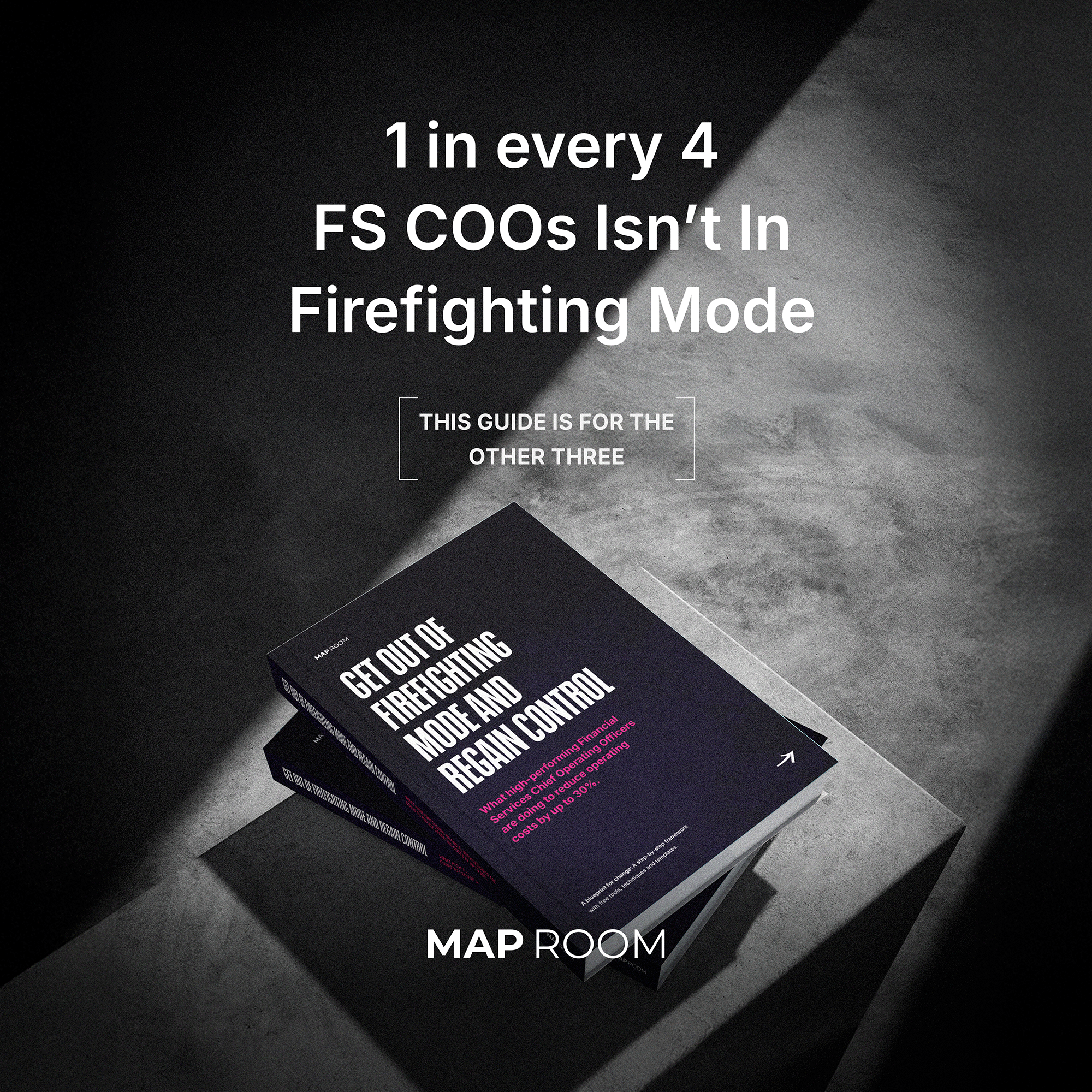
 

Get the Getting out of Firefighting Mode Guide' Image


KEY FINDINGS

WHAT WE discovered

A collaborative diagnostic

This wasn’t a piece of work "done to" the organisation. From the outset, Map Room created a cross-functional team made up of our practitioners and the customer’s own people, bringing together the right mix of Operational Excellence capability, Financial Crime expertise, operational knowledge and leadership.

Working like this gave the team access to the those who understood the operation and business best, bolstering that internal knowledge with an independent perspective and Map Room's tried and tested approach to improvement. The aim was not to arrive with a pre-determined diagnoses, but to dig into the challenges together — building the evidence, testing assumptions and creating shared ownership of what needed to change.

Discovery drew on multiple sources of data. It included facilitated sessions with the Financial Crime Senior Leadership team to define success - vision, mission, objectives and key results; 24 side-by-side process reviews; and 14 team and data deep-dives to understand demand, volumes, workflows, alert and case creation, triage, hand-offs and the operational drivers behind queues and backlogs. A bespoke capability maturity assessment was also carried out across 40 business capabilities, while focused working sessions went deeper into areas including operating model and future organisational design, change framework design and tools, and an financial crime systems review.

The evidence gathered revealed a set of connected issues that were driving cost, complexity and operational pressure:

KEY FINDING

Failure Demand Creating
Unnecessary Work.
Screening controls had evolved towards an overly cautious “catch-all, check-all” approach. Oversensitive triggers were creating high levels of false positives and unmanageable queues, consuming skilled resource on cases that often did not warrant the same level of intervention.

Colleagues often felt they weren't adding real value - or genuinely fighting financial crime - becuase so many of the cases they handled were false positives.

OPPORTUNITY

Risk-Based Approach.
The opportunity was to introduce a more evidence-led, risk-based approach - focusing skilled resources where they could have the greatest impact and exploring mechanisms such as de minimis limits, whitelists and rules for repeat remitters.

KEY FINDING

Change Itself Creating Operational Demand.
There was no consistent, central approach for managing change across the operation. No central view of all change, no change impact assessments, and governance of change was inconsistent.
 
As a result, changes would go live unexpectedly and create additional volume, competing priorities or overlapping activity - adding to change fatigue within an already pressured operation.

OPPORTUNITY

A New Change Framework.
The opportunity was to introduce a proportionate Change Management Framework that creates a single front door for change, improves prioritisation and governance, and gives teams a consistent way to assess impact, readiness and effectiveness.

KEY FINDING

The Operating Model Had
Grown Out of Control.
The orgnaisational structure had evolved over time rather than being designed around a clear operating-model blueprint. Seven independent functions, a top-heavy leadership structure, duplicated activity and unnecessary hand-offs had emerged.
 
Activities were sometimes split arbitrarily between teams; some core Financial Crime activity sat outside Financial Crime Operations, while other activity remained inside that would more naturally sit elsewhere. There was also no joined-up blueprint covering the organisation, location strategy and resource strategy.

OPPORTUNITY

Build a Target Operating Model.
Redesign the operating model around the future-state vision set by the leadership team - simplifying structures, balancing managerial spans, reducing duplication and hand-offs, and creating a clearer blueprint for how work should flow across Financial Crime Operations.

KEY FINDING

Processes Developed Around Workarounds Rather Than Flow.
Processes had also evolved organically. Limited IT/systems capacity had contributed to local workarounds and the use of non-core systems for core activities. This led to long average handling times, duplication, unnecessary hand-offs, manual error, copy-and-paste activity from none-core systems, and no consistent “one best way” of working.

OPPORTUNITY

Process Optimisation.
An opportunity to identify and redesign critical, high-demand, poor-performing processes - improving flow, removing unnecessary steps and hand-offs, and applying the right expertise at the right points to reduce handling times while protecting quality, control and risk.

KEY FINDING

Performance Management Lacked the Data and Capability it Needed.
The capability assessment provided another important signal. Across the capabilities reviewed, overall maturity scored 2.35 out of 5, with most capabilities assessed as Delivering the Basics. However, Productivity and Performance Management were the lowest-scoring, both rated as "Lacking".
The team could see this operationally. There was limited measurement and management of performance, making it difficult to identify and reward strong performance — or provide targeted support where colleagues were struggling to meet the standards expected.

OPPORTUNITY

New Performance Framework.
Build an end-to-end Performance Framework for Financial Crime - using proven learning from Map Room’s previous work in the Collections function - creating a consistent journey from hiring and training through to clear role expectations, QC/QA and ongoing performance management, with quality and productivity managed together rather than in isolation.
A High Cost-Base Was A Result of
Many Connected Symptoms.
The operation had a high resource and cost base, and had developed significant reliance on temporary resource and overtime. Cost was being driven by the interaction between failure demand, inefficient processes, organisational complexity, weak performance management and unmanaged change. The answer therefore had to be systemic rather than a simple cost-cutting exercise.
OUTCOMES

WHAT WE delivered

OUTCOME

£6.2m
annualised savings delivered through three high-impact initiatives.

OUTCOME

£3m+
in potential savings also identified through the target operating-model design and location strategy.

OUTCOME

75%
reduction in average handling times for payments processes - from 1 hour to 15 minutes.

OUTCOME

£1.14m
7 fragmented functions were consolidated into 3 clearer operational areas to remove duplication and unnecessary hand-offs. Management layers simplified and spans of control standardised - identifying £1.14m in annualised savings.

OUTCOME

£720k
A redesigned overtime approach introduced stronger controls and clearer links between overtime, productivity and business value. This identified the an 80% reduction in overtime payments and £720k in annualised savings, alongside greater operational control and reduced dependency on overtime as a response to underlying process problems.

These opportunities were identified by understanding where value was being lost - resisting the temptation to attempt fix everything at once and focusing effort on the changes most capable of moving the organisation towards its objectives. The operation moved from reacting to symptoms towards a clearer, evidence-led way of identifying and delivering improvement.

Backlogs, manual processes, delays, waste, poor productivity, too many projects and not enough measurable impact - if that feels familiar there are steps you can take without external support.

Our 'Get Out of Firefighting Mode and Regain Control' guide gives you the full blueprint behind this case study.

It walks through the complete approach - from setting direction and uncovering what is really happening, through to prioritising the critical few opportunities, designing solutions, building buy-in and identifying measurable benefits.

It includes the tools, techniques and templates to help you put the approach into practice within your own operation.

You can find the link below.

DOWNLOAD OUR free guide

'Get Out of Firefighting Mode and Regain Control' gives you the full blueprint behind this case study.

Access the complete approach - from setting direction and uncovering what is really happening, through to prioritising the critical few opportunities, designing solutions, building buy-in delivering measurable change.
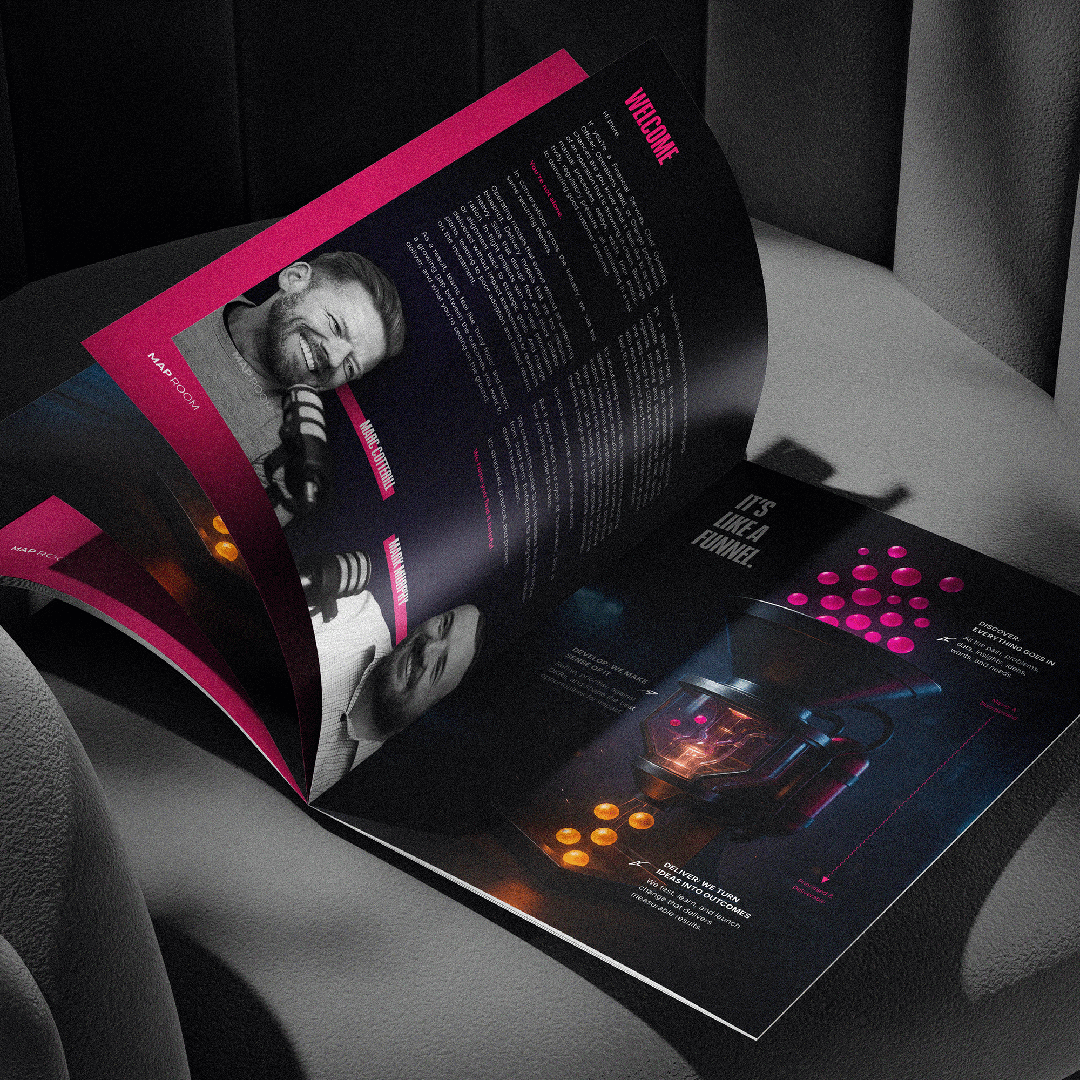
 

Image of the firefighting guide brochure with pages turning.


NEED TO GO deeper?

The guide is designed to help leaders and their teams get started themselves.

But every operation is different: if you need an independent perspective, additional capability or hands-on support to diagnose the problem, build the roadmap or deliver the change, Map Room can work alongside your team to help.