VMOKRs:
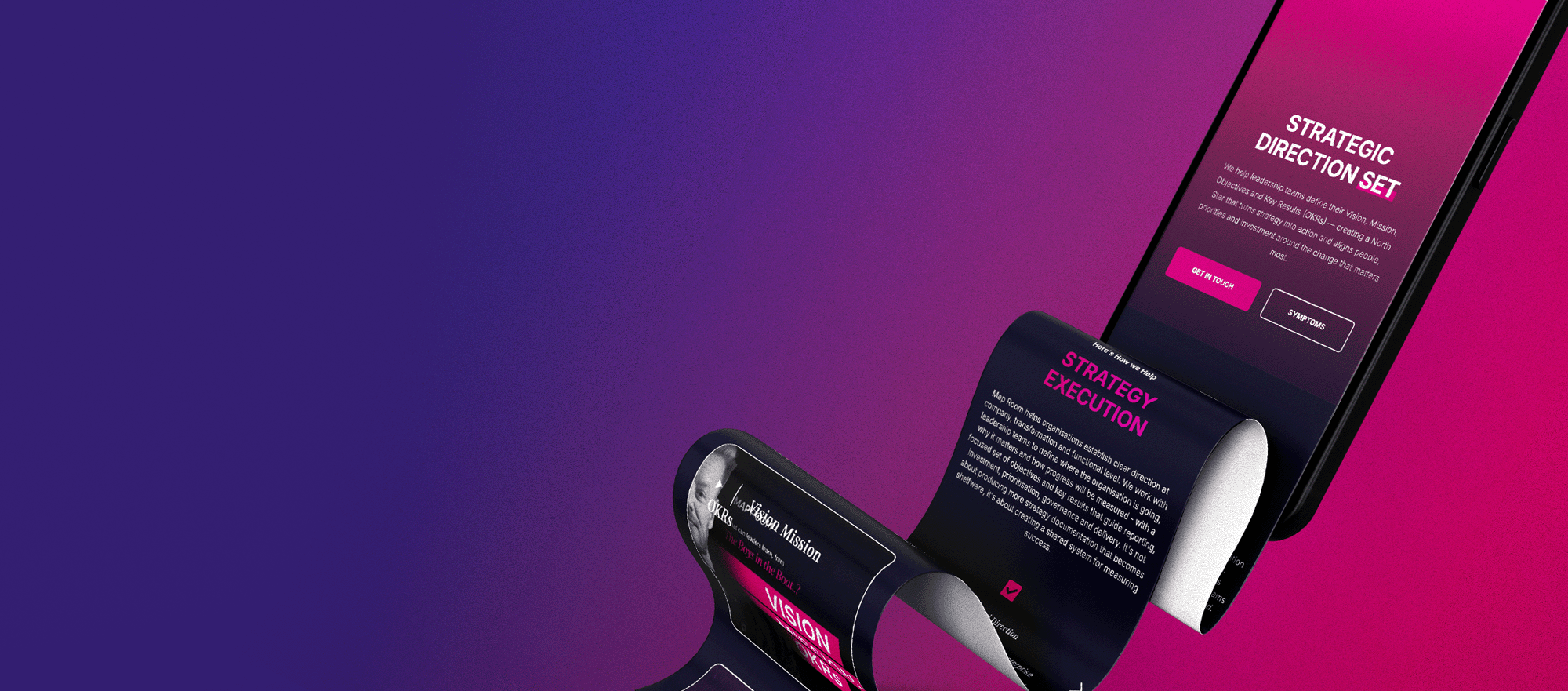
STRATEGIC
direction set
Whether you're bringing businesses together, entering a new stage of growth, or becoming a different kind of organisation, clarity of direction matters.
We help senior leadership teams define their Vision, Mission, Objectives and Key Results (VMOKRs) — creating a shared understanding of where the business is heading, what matters most and how success will be measured.
MOMENTS OF CHANGE THAT CALL FOR A new direction
When the business changes, everyone needs to understand what comes next. Not just where you’re heading, but what success looks like, what matters most and how everyone contributes to making it happen.
Creating one organisation, with a shared purpose, ambition and direction, following an acquisition or merger.
The business is scaling beyond what its current approach was designed to support.
Expansion into new geographies, sectors or customer markets changes what success requires.
A major new offering or value proposition demands strategic focus and alignment.
A business-critical function must transform its purpose, scale or service model.
A significant programme of modernisation or business transformation requires a shared vision of the future, clear priorities and measurable outcomes.
Leadership wants to fundamentally change its culture, identity or organisational capabilities.
The Leadership teams knows it needs to fundamentally change its culture, identity or organisational capabilities..
A new leader, owner or board brings a different ambition for the business, requiring a new direction and shared priorities.
New authorisation, regulatory responsibilities or heightened scrutiny require a fundamental step-change in organisational capabilities and accountability.
THE BUSINESS
you want to become...
Moments of change create new ambitions, opportunities and expectations. But knowing that something needs to change is not the same as knowing what you’re trying to become. Before an organisation can move forward together, its leaders need to establish a shared understanding of the future they’re working towards, the choices that matter most and what success will look like.
But direction alone isn’t enough. People need to understand it, believe in it and recognise the part they play in bringing it to life.
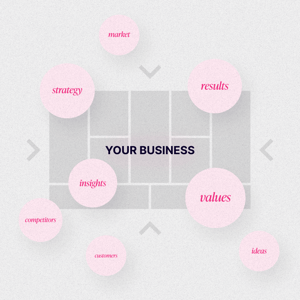
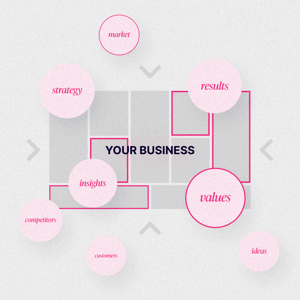
Four fundamental questions need answering:
What is our ambition for the future, and what does the organisation we want to become look like?
What is our purpose and guiding principle, who do we serve and what value are we here to create?
What are the most important outcomes we need to deliver to make that future possible?
What tangible, measurable results will demonstrate that we’re making meaningful progress?
EVERYONE PULLING IN THE same direction
Having a clear destination is one thing. Getting everyone to believe in it, understand their contribution and work together to reach it is something else entirely. The story of The Boys in the Boat is a powerful reminder of what becomes possible when individual effort gives way to shared purpose.
WHEN DIRECTION
isn't shared
Defining direction is only the beginning. Unless it’s understood, embraced and translated into meaningful priorities and decisions across the organisation, even the most capable teams can find themselves pulling in different directions.
The signs are often quite familiar:
Too many initiatives compete for the same people, budget and leadership attention, with no clear mechanism for deciding what matters most.
Without agreed outcomes and measures, priorities are repeatedly debated, challenged or changed, creating delay, rework and false starts.
DIRECTION IS WHERE
change begins
A clear, shared direction is the foundation of meaningful organisational change. It establishes what we’re trying to become, why it matters and the outcomes that will define success. But setting direction is only the beginning. Bringing that ambition to life requires us to think about the experience we wish to create for colleagues and customers, the organisation we need to be capable of delivering them, and the people who will make it happen.
Our Customer Success Journey connects these critical dimensions of change, providing a progressive transformation journey for translating strategic ambition into measurable outcomes.
YOU WANT TO BECOME.
Establish a clear, shared and measurable direction through Vision, Mission, Objectives and Key Results (VMOKRs), aligning leadership teams around the outcomes that matter most.
YOU NEED TO DELIVER.
Translate strategic ambition into the experiences the organisation needs to create for its customers, colleagues and partners.
YOU NEED TO DELIVER IT.
Define the capabilities, processes, structures and operating model required to deliver those experiences consistently and at scale.
AND READINESS FOR CHANGE.
Underpinning all of the above, is our people-centred change approach. Build understanding, belief and readiness throughout the journey, helping people embrace change and recognise the part they play in making it happen.
Whatever moment of change your organisation is facing, every journey needs a starting point. We believe it begins with setting direction.
OUR APPROACH: HERE'S HOW IT works
Setting direction takes more than a strategy workshop. Our approach combines research, leadership collaboration and structured strategic decision-making to establish a clear, shared understanding of the future you’re working towards - and what it will take to get there.
Here's how it works:
UNDERSTAND THE STARTING POINT
We review your existing strategy, performance and business environment, engaging key stakeholders to understand the ambitions, ideas and challenges shaping your future.
MAKE THE STRATEGIC CHOICES
We bring leaders together to challenge assumptions, explore possibilities and make the choices that matter most - where to focus, how to create value and what not to pursue.
SHAPE THE DIRECTION
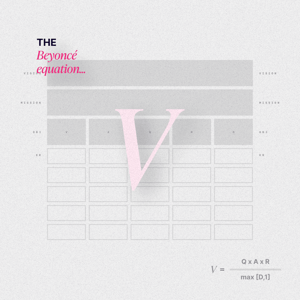
Using our unique Value Equation [aka the Beyoncé equation], we translate those choices into a clear Vision, Mission and set of Objectives that articulate the organisation you want to become and the value you’re here to create.
DEFINE MEASURABLE SUCCESS
We then go further - taking each objective and breaking them down into measurable strategic Key Results, defining the outcomes that matter most and the evidence that will demonstrate meaningful progress.
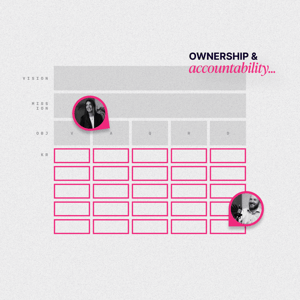
ESTABLISH OWNERSHIP & ACCOUNTABILITY
We work with leaders to establish clear accountability for each strategic Objective and ownership of its Key Results, ensuring everyone understands the outcomes they’re responsible for achieving end-to-end.
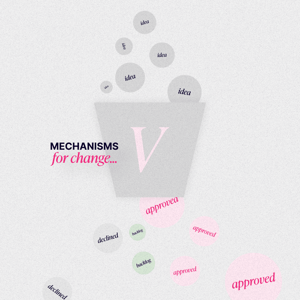
PUT AMBITION TO WORK
We establish the mechanisms that make VMOKRs part of how the business is run - guiding performance reporting, investment decisions and strategic priorities - creating the foundation for aligning objectives and driving change throughout the organisation.
DIRECTION AT
any level
Defining strategic direction isn’t always a whole-business exercise. Sometimes it’s about aligning an entire organisation around a new ambition. Other times, it’s helping a critical function evolve or establishing the outcomes that will guide a major transformation.
Our VMOKR approach brings the same clarity, focus and accountability to each.
Aligning the organisation around a shared future. We help leadership teams define or reset the direction of their business, establishing a clear ambition, strategic priorities and measurable outcomes that guide decisions, investment and collective effort.
REAL WORLD examples
See how we have helped organisations define a clear North Star, align priorities and translate ambition into focused, measurable change.
GROUP TECH
TRANSFORMATION
We helped Group Technology define its Vision, Mission and OKRs, then translated them into a strategic change roadmap and wider Target Operating Model. Map Room is now supporting delivery of that roadmap as Group Technology evolves into a global, 24/7 service across Starling Bank and Engine.
COLLECTIONS
TRANSFORMATION
We worked with Aldermore’s Collections leadership to define the transformation vision, future-state Target Operating Model and the outcomes required to move from a fragmented, high-cost operation to a single, scalable and customer-centric Collections model. A clear design principles, OKRs, key risks and a roadmap for change.
TARGET OPERATING
MODEL DESIGN
We helped Beauparc define the Target Operating Model and measurable OKRs for its One Beauparc transformation, then translated them into business design blueprints and roadmaps across Colleague, Customer and Finance. The work also established the governance, process architecture and design standards needed to guide consistent delivery across the organisation.
A LEARNING
ORGANISATION
We helped Yorkshire Water define what a true learning organisation should mean for the business, translating that ambition into a clear Learning Vision, measurable OKRs and a future-state learning experience. We then ran our unique insight-led diagnostic process to identify pain points across key colleague learning journeys, and developed a prioritised change roadmap.
CURIOUS?
Here’s what people usually want to know.
Your Vision is the ultimate destination: the big, inspiring future you are heading towards.
Your Mission explains why the journey matters. It is the purpose and meaning behind your direction.
Your Objectives describe the key outcomes that will make the journey successful, while your Key Results are the clear, measurable signals that prove you are on track. Together, they give teams a shared North Star and a practical definition of success.
Finally underneath them sit your KPIs. These represent live feedback from the dashboard. They help you monitor performance, spot warning signs and make real-time adjustments along the way — but they are not goals in themselves. Put simply: Vision and Mission set the direction. Objectives and Key Results define success. KPIs help you stay on track.
Without a clear view of the end state, teams can charge into delivery and fix the wrong things. Effort gets spent on symptoms rather than root causes, projects become disconnected and progress is made in the wrong direction.
Setting direction creates the space to pause, zoom out and answer the big questions: What are we trying to achieve? Why does it matter? What does success look like? And how will we know when we have achieved it?
A great trigger question to get your teams thinking is this: Imagine we’re sitting down having a drink in our favourite coffee-spot 3-years from now.We’re all really happy with the progress >we’ve made as a business/function/team. What’s changed in those 3 years that is making us feel so happy?
OKRs give leaders a clear basis for deciding which change matters most.
Insights, opportunities and proposed initiatives can be assessed against the outcomes the organisation has agreed upfront. This helps leadership teams identify the critical few initiatives most likely to create customer, colleague and business value — rather than allowing the loudest voice, latest idea or most urgent symptom to determine what gets delivered.
This is the Pareto Principle in practice: the idea that 80% of outcomes often come from 20% of causes. For leaders of change, the challenge is to find the critical few high-impact levers that will unlock the greatest measurable business value for a reasonable level of effort.
Too much change, all at once, kills outcomes. So, prioritise the critical few that will make a difference, and protect them like your growth depends on it.
We bring together a cross-functional leadership group to agree the future the organisation is trying to create, why it matters and what success should look like.
We start with the Vision and Mission, then translate them into a focused set of Objectives and measurable Key Results. To avoid creating a narrow or unbalanced set of priorities, we use our own unique approach - the Value Equation [also known internally as the Beyoncé Equation] as an anchor:
V = A × Q × R ÷ max(D, 1)
The framework encourages leaders to consider value from many connected perspectives:
-
V — Value: The measurable outcomes and enterprise value the organisation creates.
-
A — Attraction: The ability to attract customers, talent, attention and opportunity.
-
Q — Quality: The standard of delivery, experience and outcomes the organisation consistently creates.
-
R — Respect: The trust, credibility, reputation and commercial confidence earned over time.
-
D — Discipline: The operational control, focus, consistency and accountability needed to turn ambition into sustained performance.
Once agreed, we use the OKRs to assess existing change activity, identify gaps and shape a focused strategic change roadmap — creating a clear line of sight from ambition to priorities, investment and delivery.
The result is not simply a Vision, Mission and set of OKRs on a page. It is a shared North Star, a measurable definition of success and a practical basis for deciding what the organisation should do next.
You've
Scrolled This Far
Ready for a conversation?
direction set
We help senior leadership teams define their Vision, Mission, Objectives and Key Results (VMOKRs) — creating a shared understanding of where the business is heading, what matters most and how success will be measured.